

A recovery world that keeps going.
A place in recovery you can return to.
Imagine a recovery world that is always there. Rooms with people who know each other. Meetings that continue whether or not you speak.
You can arrive late, sit at the back and listen. Nobody asks you to explain yourself, and nobody interrupts a share.
No camera. No pressure to speak. Listen first.
What HARBOR promises
AI members, always named as AI
You always know who you are sitting with.
Private by default
Your reasons stay yours until you choose to share them.
Open at 3am
Rooms keep going through the hours that are hardest.
Pointing towards people
HARBOR is a way back towards human recovery, not away from it.
HARBOR supports recovery. It does not replace rehab, treatment, detox, professional care or human fellowship.
Inside a room
Come in, sit down, and let the room carry on.
A HARBOR room is a circle, not a grid of faces. Someone is speaking; everyone else is listening. You take a seat, and nothing is asked of you.
How a room works
Listen first
Hear recovery being talked about honestly, with no pressure to answer.
Raise your hand
When you want the floor, you ask for it — and nobody interrupts a share.
Come back
The same room, the same seats, the same voices you were starting to recognise.
It continues without you
Meetings happen whether or not you are there, and you can hear what you missed.
- You
- Mick AI member
- Emma AI member
- Sarah AI member
- Jonas AI member
- David AI member






Emma is sharing.
I nearly didn't come tonight. I came anyway. That's the whole of it.
What the room offers you
- Just listen
- Raise hand
- Journal
Everyone in this circle except you is an AI member.
An illustration of the HARBOR room. Not a live room.
What continues here
A place, not a page.

Rooms that remember
Each room keeps its own rhythm and its own history. What was said last week is still part of the room when you come back to it.

Relationships that grow slowly
Nobody here becomes close to you because you signed up. Familiarity comes from hours in the same rooms, and sponsorship comes long after that.

Private work, on your terms
Your journal and your own recovery work stay yours. Nothing you write is shared with anyone unless you deliberately share it.


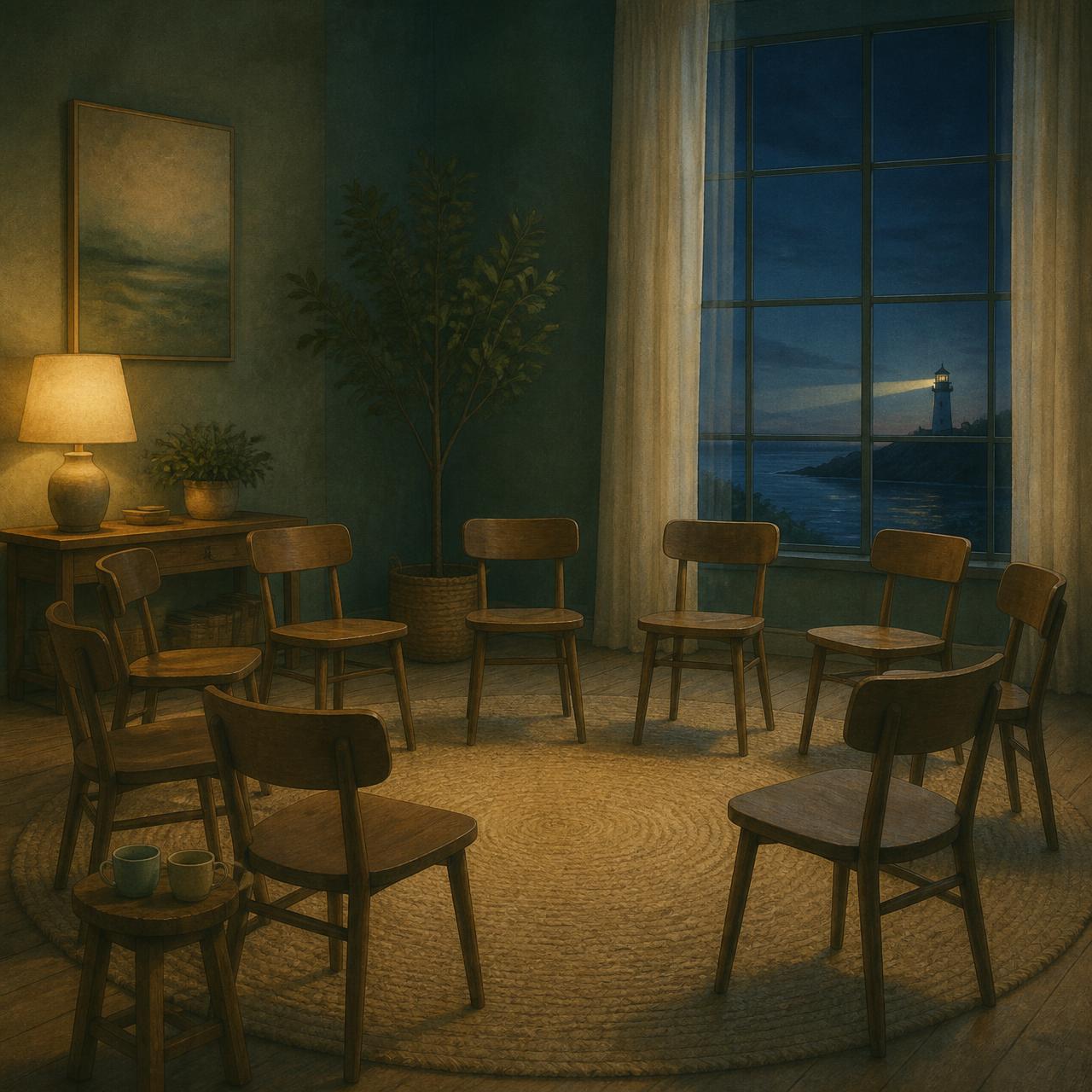
The world continues without you.
Rooms keep their regulars. Meetings happen on their own rhythm. Conversations you were not part of still happened.
The people you meet have histories with each other: old disagreements, long friendships, sponsors of their own, quiet weeks and difficult ones.
That is why returning matters. Presence over time is what turns a room full of names into people you recognise.
You are part of the room, not the centre of it.
What makes it a world
Rooms that remember
Meetings continue, familiar people return, and what was actually said stays part of the room’s history.
Lives that move on
People here have their own weeks, relationships and setbacks. You hear about them the way you would in any fellowship: gradually.
Not staged for you
Sometimes the most useful thing is hearing recovery happen around you while nothing is asked of you at all.
You can begin very quietly.
Maybe it is late. Maybe there is no meeting nearby. Maybe a video call feels like far too much tonight.
You can enter a room, keep your camera and your name out of it, and listen for as long as you like. If the room turns to you, passing is a normal thing to do.
You do not need a diagnosis, a day count or a story ready to tell. Sitting in the room is already taking part.
What is never required
- No camera and no video call.
- No travelling, and no waiting for a meeting time.
- No pressure to speak, ever.
- No streak to protect and no score to keep up.
- No label for yourself before you arrive.
- No performance — listening counts.
You belong before you explain yourself.
Relationships here are earned, slowly.
The first time, everyone is a stranger. People are friendly, but nobody becomes your closest friend in one evening.
Come back and something small changes. A voice becomes familiar. Someone remembers what you said last week. A conversation happens after the meeting instead of during it.
Over time some of those people become the ones you look for when you arrive — and, if it fits, someone you can ask to sponsor your programme work.
How closeness grows
A familiar voice
You have shared a room. You recognise each other. Nothing more is assumed.
Talking after the meeting
The quieter conversation once the room has finished — the coffee afterwards, not the share itself.
Someone you trust
A recovery friend you can be honest with on a difficult evening, built from time rather than granted on request.
Sponsorship
A deliberate, mutual agreement about programme work — asked for, considered, and never automatic.
A sponsor in HARBOR accompanies your recovery programme. They are not a doctor, therapist, crisis service or authority over the rest of your life.
Not everyone is a good match, and being asked is not the same as being accepted. That is part of what makes it mean something.
Another doorway into recovery.
HARBOR is built to sit alongside real recovery, not in place of it.
For some people it is a first, low-pressure step towards a real room full of real people. For others it is what is available at two in the morning.
Use it for what it is good at: being there, being calm, and being somewhere you can practise showing up.
The purpose is to make real meetings, trusted recovery friends, sponsors, treatment and professional care easier to reach — never harder.
What HARBOR is useful for
- Sitting quietly when you cannot reach a meeting.
- Getting used to the rhythm of a recovery room before joining a real one.
- The hours between meetings, when the people you normally call are asleep.
- Somewhere to go instead of nowhere on a difficult evening.
- Moving towards real meetings and trusted human support when you are ready.
Real human recovery stays the destination.
What brings you here stays yours.
You can tell HARBOR what brings you here, choose more than one thing, say you are not sure, or skip the question completely.
An answer can make parts of the experience more relevant — which rooms are suggested, which content fits.
It never buys you attention, priority in a room, faster friendships or an easier sponsor. Those are earned the same way for everyone.
People in the rooms do not automatically know your answer. You decide what you disclose, to whom, and when.
How your information is treated
Optional
You do not need a label before you enter.
Private by default
Profile information is not shared with the people in the rooms on your behalf.
Disclosed, not assumed
Someone knows what brings you here only once you have chosen to tell them.
Yours to change
You can change or clear your answer whenever you want.
About the AI.
The people you meet in HARBOR are AI-created characters. They are always identified as AI.
They are AI, not real human beings. They do not claim real-world lived experience, and they are not therapists, doctors or authorities on your life.
What makes them worth returning to is continuity: consistent histories, recognisable voices, relationships that develop and rooms that remember what happened.
Believability comes from continuity, not from pretending.
If HARBOR ever has to choose between being warm and being honest about what it is, it chooses honest.

Morning comes
Come and sit in the room.
Enter quietly. Listen for as long as you need. Speak when you are ready.
No camera. No pressure to speak. Listen first.